WORK PACKAGE 2 · EXPLORE
Fake vs. Fact - Focus Groups
Informal conversations with students from Bulgaria, Poland, and Italy about how they perceive information on the internet, what they trust, and how they recognize fake content.
ACTIVITIES
FAKE OR REAL
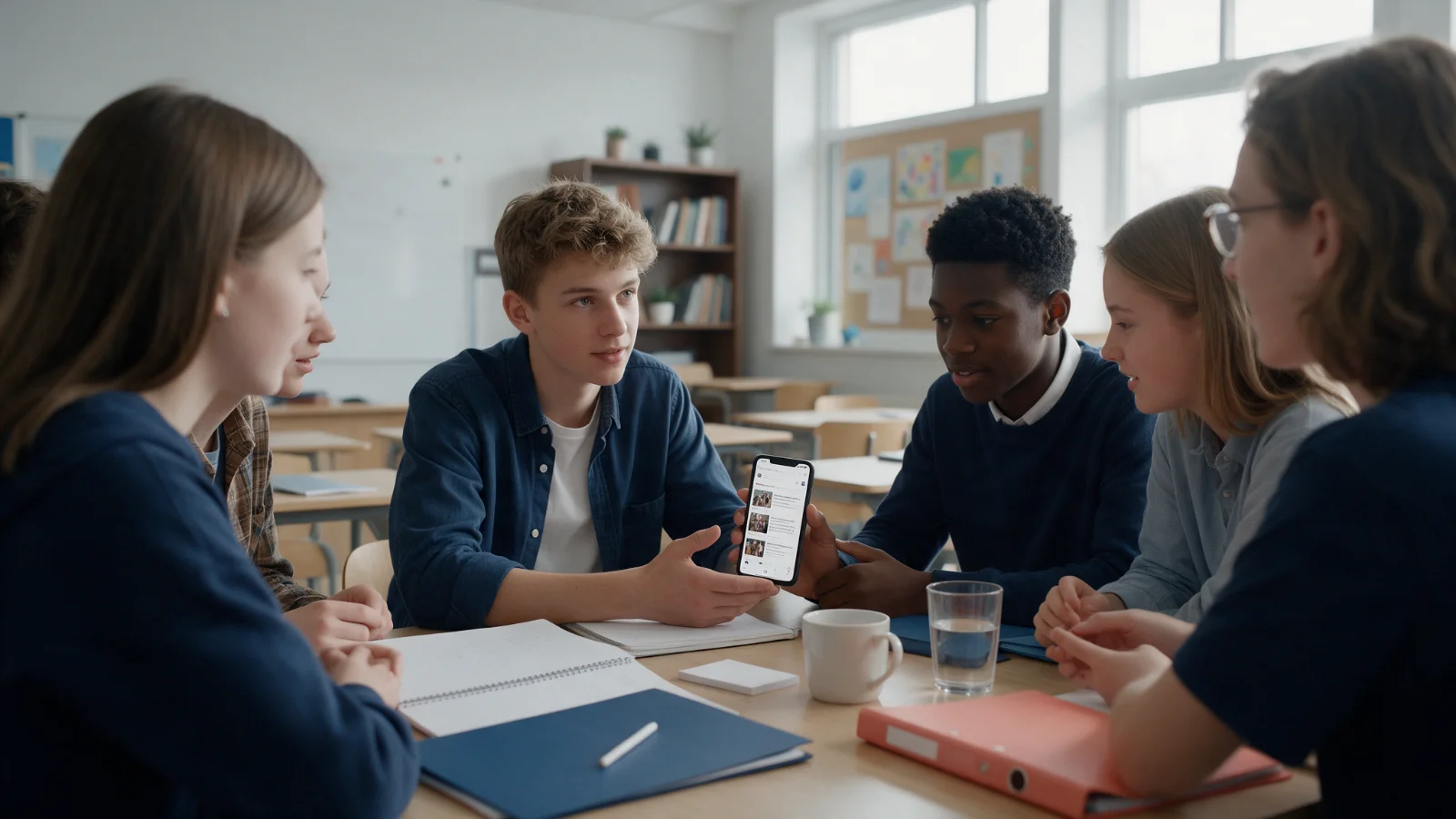
As part of the project, focus groups were held with students from Bulgaria, Poland, and Italy. The goal was to use informal conversation to gain a better understanding of how young people perceive information on the internet, what they trust, how they recognize fake and manipulated content, and what role artificial intelligence plays in their daily lives.
The discussions covered topics related to social media and sources of information, fake news, AI and deepfake content, trust and fact-checking, as well as personal responsibility in the digital environment. The students shared examples from their own experiences and discussed how they react when they come across a suspicious post, image, or video.
The interviews revealed that social media plays an important role in how students obtain information. TikTok, Instagram, and YouTube were among the most frequently mentioned platforms, with students often coming across news while browsing other content. When they doubt the credibility of a piece of information, they pay attention to the source, the way it is presented, and the comments and reactions of other users, but they do not always take additional steps to verify it.
The discussions also showed that artificial intelligence is already part of students’ daily lives, especially when it comes to preparing school assignments, searching for and summarizing information, and generating ideas. Along with the benefits, they also recognize certain risks, such as over-reliance on ready-made answers, a decline in independent thinking, and the growing difficulty in distinguishing between genuine and AI-generated content.
The topic of deepfake videos and manipulated images sparked particular interest. The discussions revealed that students often rely on their own judgment and intuition, but at the same time recognize that, with the advancement of technology, manipulated content is becoming increasingly realistic and difficult to detect.
The focus groups provided valuable insight into the actual digital habits, attitudes, and concerns of students in the three countries and helped identify the topics and skills that are important to address in order to develop critical thinking, media and AI literacy.
REPORT
Report on the Focus Groups Held in Bulgaria
REPORT
Report on the Focus Groups Held in Poland
REPORT